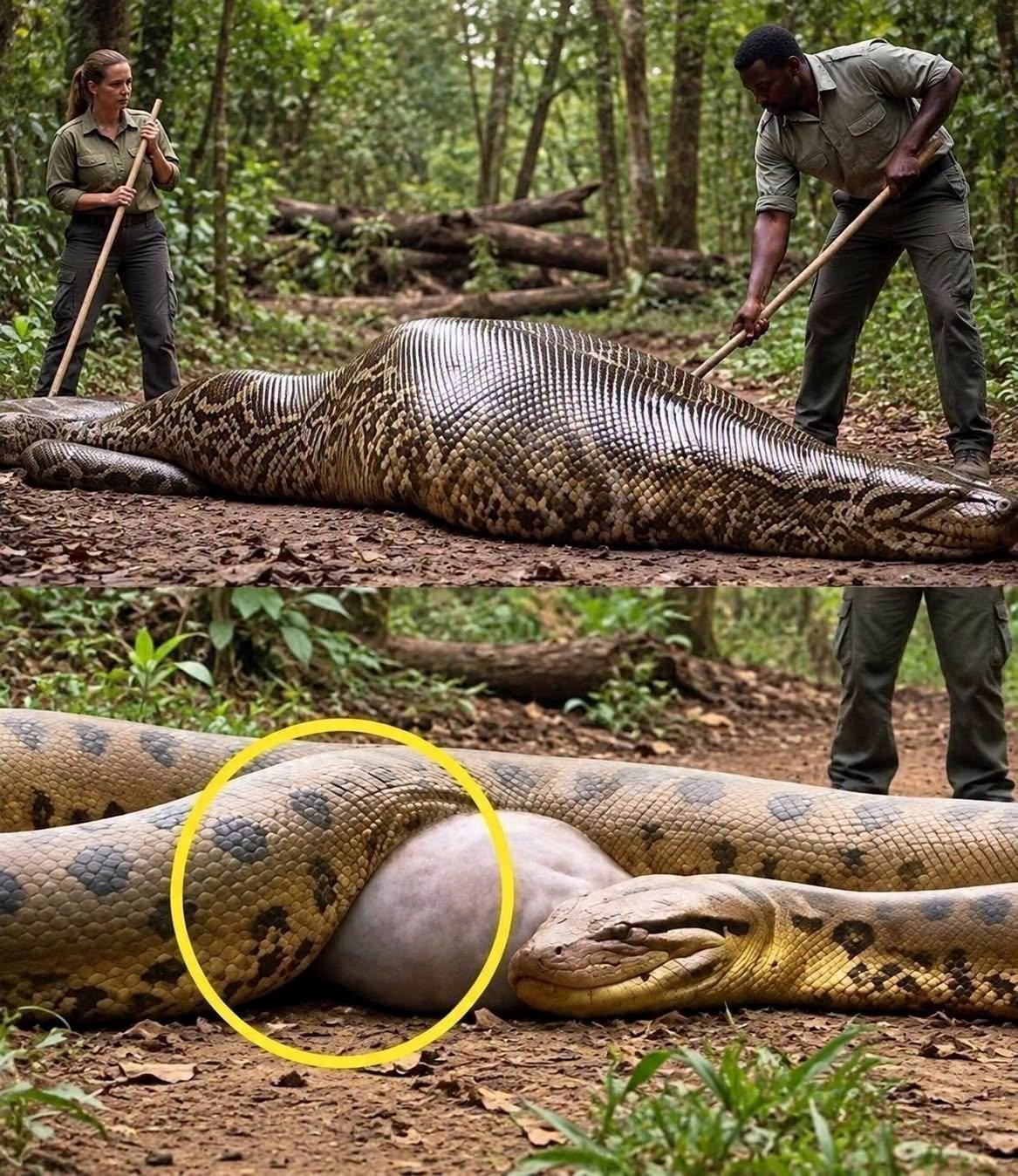
The snake was dying from the inside. Rangers circled the massive anaconda, its body heaving, its eyes dull, as they realized something inside it didn’t belong. Time was running out. Every second meant more pain, more risk, more damage to the fragile wetland. What they pulled from its stomach left them silent.
They sedated the green anaconda as gently as possible, its immense coils gradually slackening in the murky shallows. Under the harsh glare of portable lamps, the rangers worked in near silence, guided by training, instinct, and the urgent knowledge that this animal was both a powerful predator and a fragile patient. When they examined its distended abdomen, the cause became painfully clear: a hard-edged piece of synthetic human waste had become trapped inside its digestive system.
The obstruction had caused severe distress. Carefully, the team removed the foreign material, treated the damaged tissue, and monitored the animal as it slowly began to respond. For a tense period, nobody knew whether the giant snake would survive.
Then came the first encouraging sign.
Its tongue flicked through the humid air.
A few moments later, its muscles began to tighten. Its breathing steadied. The animal that had seemed dangerously close to death was beginning to fight its way back.
The rangers continued monitoring it before eventually returning it to the wetland. They knew the anaconda had survived, but the incident had exposed a much larger problem. Plastic and other discarded materials can travel through waterways, accumulate in wetlands, and become deadly hazards for animals that never evolved to recognize them as danger.
The frightening part was that the object had not attacked the snake. No predator had wounded it. No natural disaster had threatened its life.
It was human carelessness.
Wetlands are complex ecosystems where every creature plays a role. A single piece of discarded waste can move through the environment, become trapped in vegetation, enter the water, or be mistaken for food. For an animal as large as an anaconda, the consequences can still be devastating.
The rescue team documented the incident as a reminder that protecting wildlife doesn’t end when an animal is released back into the wild. It also means protecting the places where wildlife lives.
The anaconda had survived what should never have happened to it.
And as it disappeared into the dark water, the rangers were left with a simple warning: nature can survive many things, but it should not have to survive us.